
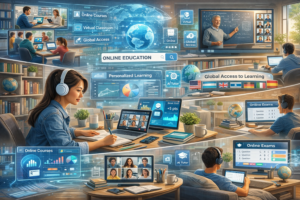
Education has undergone a major transformation in recent years due to technological advancements and the increasing availability of internet connectivity. Traditional classroom learning, which once required physical presence in schools and universities, is now complemented by online education and digital learning platforms. The growth of online education has made learning more flexible, accessible, and inclusive for students around the world. Digital classrooms allow learners to access educational resources, attend lectures, collaborate with teachers, and complete assignments using online tools. This shift toward digital learning is reshaping the global education system and creating new opportunities for students, educators, and institutions.
Understanding Online Education
Online education refers to a learning system where students receive instruction through internet-based platforms instead of traditional face-to-face classrooms. Courses are delivered through virtual learning environments that include video lectures, digital reading materials, interactive assignments, and discussion forums.
This method of education allows students to learn from anywhere at any time, making it particularly beneficial for people who cannot attend physical classes due to geographical or time constraints. Online education also offers a wide range of subjects and professional courses that help learners gain new skills and knowledge. As technology improves, online learning continues to become more engaging and interactive.
The Rise of Digital Classrooms
Digital classrooms represent a modern form of teaching where technology plays a central role in the learning process. These classrooms use digital tools such as smart boards, online collaboration platforms, educational software, and virtual communication systems to enhance teaching and learning experiences.
Teachers can present lessons using multimedia content, conduct live discussions, and provide real-time feedback to students. Digital classrooms also allow students to participate in group projects, quizzes, and virtual activities. This interactive learning environment encourages collaboration and helps students develop critical thinking and digital literacy skills that are essential in the modern world.
Role of Technology in Online Learning
Technology is the foundation that makes online education possible. High-speed internet, cloud computing, video conferencing tools, and digital learning platforms enable students and teachers to connect in real time. Learning management systems help organize courses, track progress, and manage assignments effectively.
Artificial intelligence and data analytics are also being used to personalize learning experiences by analyzing student performance and recommending suitable learning resources. Interactive technologies such as virtual simulations and educational apps further enhance student engagement. As technology continues to evolve, it is expected to make digital learning even more effective and accessible.
Benefits of Online Education
Online education offers several advantages that make it an attractive option for modern learners. One of the most important benefits is flexibility. Students can access learning materials and attend classes according to their own schedules, which is especially useful for working professionals and adult learners.
Another key advantage is accessibility. Students from remote areas or different countries can enroll in courses offered by institutions located anywhere in the world. Online education also provides a wide variety of courses that allow learners to explore new subjects, improve professional skills, and pursue career development opportunities. These benefits make digital learning an important part of modern education systems.
Challenges in Digital Learning
Despite its advantages, online education also presents certain challenges. One of the main concerns is the lack of direct face-to-face interaction between teachers and students. This can sometimes affect communication, engagement, and the overall classroom experience.
Technical issues such as poor internet connectivity or limited access to digital devices can also create barriers for some learners. Additionally, online learning requires strong self-discipline and time-management skills, as students must take responsibility for completing their coursework independently. Addressing these challenges is essential to ensure that digital education remains effective and inclusive.
Importance of Teacher Adaptation and Training
Teachers play a critical role in the success of online education. As digital classrooms become more common, educators must adapt their teaching methods to suit online learning environments. This requires training in digital tools, virtual communication techniques, and online assessment methods.
Well-trained teachers can design engaging lessons that encourage participation and interaction among students. They can also use multimedia resources, online discussions, and collaborative activities to create a dynamic learning experience. Continuous professional development helps educators stay updated with new educational technologies and teaching strategies.
Impact on Global Education Access
The growth of online education has significantly expanded access to learning opportunities worldwide. Students from different countries can now participate in international courses and academic programs without relocating. This has created a more connected global learning community.
Online education also supports lifelong learning by allowing individuals to continue their education at any stage of life. Professionals can upgrade their skills, entrepreneurs can learn new business strategies, and individuals can explore academic subjects for personal development. This accessibility has made education more inclusive and adaptable to modern societal needs.
Hybrid Learning Models
Many educational institutions are now adopting hybrid learning models that combine traditional classroom teaching with online education. In this approach, students attend some classes in person while completing other coursework online.
Hybrid learning allows institutions to benefit from both teaching methods. Face-to-face interaction encourages discussion and social engagement, while online learning provides flexibility and access to digital resources. This blended approach is becoming increasingly popular because it supports diverse learning styles and improves the overall educational experience.
The Future of Online Education
The future of education is expected to be strongly influenced by digital learning technologies. Innovations such as artificial intelligence, virtual reality, and adaptive learning platforms are likely to transform how educational content is delivered and experienced.
Virtual reality may allow students to explore historical sites, conduct scientific experiments, or practice professional skills in simulated environments. AI-based systems may personalize learning pathways according to individual strengths and weaknesses. These developments suggest that digital education will continue to evolve and become an integral part of global learning systems.
Conclusion
The growth of online education and digital classrooms has reshaped the way people learn and access knowledge. By combining technology with innovative teaching methods, digital learning has made education more flexible, accessible, and inclusive. While challenges such as technical barriers and reduced face-to-face interaction remain, ongoing technological advancements and improved teaching strategies are helping address these issues.
As educational institutions continue to integrate digital tools and hybrid learning models, online education will play an increasingly important role in the global education landscape. By embracing these changes, students and educators can benefit from a more dynamic and connected learning environment that supports lifelong learning and professional development.
Read more : webxcels.com