
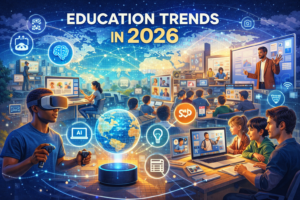
Education is evolving rapidly as technology, digital tools, and innovative teaching methods reshape how students learn and how educators teach. In 2026, education trends are focused on creating more personalized, flexible, and technology-driven learning experiences. Schools, universities, and online platforms are adopting modern solutions that improve accessibility and engagement for learners worldwide.
The future of education is not limited to traditional classrooms anymore. Digital learning platforms, artificial intelligence, and hybrid education models are transforming the learning environment. These advancements are helping students develop practical skills, critical thinking, and adaptability needed in the modern workforce. Understanding these emerging education trends can help educators, students, and institutions prepare for the future of learning.
The Rise of Online and Hybrid Learning
Online learning continues to grow as one of the most significant education trends in 2026. Many educational institutions now combine traditional classroom teaching with digital learning platforms, creating hybrid learning environments. This flexible model allows students to access learning materials anytime and from anywhere.
Hybrid education improves accessibility for students who cannot attend physical classes regularly. It also enables educators to provide interactive content such as recorded lectures, discussion forums, and online assessments. This combination of physical and digital learning enhances engagement and supports diverse learning styles.
Key benefits of online and hybrid learning include:
-
Flexible learning schedules for students
-
Access to global educational resources
-
Interactive digital learning tools
-
Improved accessibility for remote learners
This trend is making education more inclusive and adaptable to modern lifestyles.
Artificial Intelligence in Education
Artificial intelligence (AI) is playing an increasingly important role in transforming the education sector. AI-powered tools can analyze student performance, identify learning gaps, and provide personalized learning recommendations. These technologies help educators understand student needs more effectively.
AI is also being used in smart tutoring systems and automated grading tools. These systems allow teachers to focus more on mentoring and supporting students rather than spending time on repetitive tasks. As AI continues to evolve, it will further enhance personalized learning experiences.
Applications of AI in education include:
-
Intelligent tutoring systems
-
Automated grading and feedback
-
Personalized learning pathways
-
Data-driven student performance analysis
AI technology is helping create more efficient and customized learning environments.
Personalized Learning Approaches
Personalized learning is becoming a key education trend in 2026. Instead of following a one-size-fits-all curriculum, educational institutions are focusing on adapting lessons to meet the individual needs of students. Personalized learning allows students to learn at their own pace and focus on areas where they need improvement.
This approach uses digital tools and data analysis to create customized learning experiences. Teachers can track student progress and modify teaching strategies accordingly. As a result, students become more engaged and motivated to learn.
Advantages of personalized learning include:
-
Better understanding of complex subjects
-
Increased student engagement and motivation
-
Learning paths tailored to individual needs
-
Improved academic performance
Personalized learning helps students reach their full potential by addressing their unique learning styles.
The Growth of Skill-Based Education
Another major trend transforming education in 2026 is the focus on skill-based learning. Traditional education systems often emphasize theoretical knowledge, but modern employers increasingly value practical skills. Educational institutions are now integrating real-world skills into their curriculum.
Skill-based education prepares students for careers by teaching them practical abilities such as problem-solving, communication, and digital literacy. Many programs now include hands-on projects, internships, and industry collaborations.
Important skills emphasized in modern education include:
-
Critical thinking and problem-solving
-
Digital and technological literacy
-
Communication and teamwork skills
-
Creativity and innovation
By focusing on practical abilities, education systems are better preparing students for the evolving job market.
Virtual Reality and Augmented Reality in Learning
Virtual reality (VR) and augmented reality (AR) are transforming how students experience education. These immersive technologies allow learners to explore interactive environments that enhance understanding and engagement. For example, students can virtually visit historical sites, explore scientific simulations, or practice medical procedures.
VR and AR create a more dynamic learning experience compared to traditional teaching methods. They help students visualize complex concepts and improve knowledge retention. These technologies are especially useful in fields such as medicine, engineering, and science.
Benefits of VR and AR in education include:
-
Interactive and immersive learning experiences
-
Improved visualization of complex concepts
-
Increased student engagement
-
Practical simulations for skill development
As technology becomes more accessible, immersive learning tools will continue to expand in educational institutions.
Microlearning and Short Educational Content
Microlearning is becoming increasingly popular as students prefer shorter and more focused learning sessions. Instead of long lectures, educational content is now delivered in small, easily digestible modules. This method helps learners absorb information more effectively.
Short videos, quizzes, podcasts, and interactive lessons are commonly used in microlearning. These formats allow students to learn specific skills quickly without feeling overwhelmed by large amounts of information.
Key advantages of microlearning include:
-
Better information retention
-
Flexible and time-efficient learning
-
Increased learner engagement
-
Easy access through mobile devices
Microlearning is particularly useful for professional training and continuous skill development.
The Importance of Lifelong Learning
In today’s rapidly changing world, education does not stop after graduation. Lifelong learning has become an essential trend as professionals continuously update their skills to stay competitive in the workforce. Online courses, certifications, and digital training programs make it easier for individuals to continue learning throughout their careers.
Many organizations encourage employees to participate in ongoing learning programs to improve productivity and innovation. Continuous education helps individuals adapt to technological advancements and changing industry demands.
Examples of lifelong learning opportunities include:
-
Online certification programs
-
Professional development courses
-
Digital skill training platforms
-
Industry-specific workshops
Lifelong learning promotes personal growth and long-term career success.
Global Collaboration in Education
Technology has made it easier for students and educators from different countries to collaborate and share knowledge. Global education networks allow learners to participate in international projects, online classrooms, and cultural exchange programs.
Collaborative learning environments encourage students to develop cross-cultural communication skills and global perspectives. This international exposure helps prepare students for careers in an increasingly interconnected world.
Benefits of global collaboration in education include:
-
Exposure to diverse perspectives
-
International learning opportunities
-
Development of cultural awareness
-
Stronger global academic networks
Global connectivity is helping education become more inclusive and collaborative.
Challenges Facing Modern Education
While education trends in 2026 offer many opportunities, they also present several challenges. One of the biggest issues is the digital divide, where some students lack access to technology and reliable internet connections. This gap can create inequalities in learning opportunities.
Another challenge is ensuring data privacy and cybersecurity when using digital education platforms. Institutions must implement strong security measures to protect student information.
Common challenges in modern education include:
-
Limited access to digital technology
-
Data privacy concerns
-
Teacher training for new technologies
-
Maintaining student engagement in online learning
Addressing these challenges is essential for building a sustainable and inclusive education system.
Conclusion
Education trends in 2026 are transforming the future of learning by integrating technology, personalization, and global collaboration. Innovations such as artificial intelligence, virtual reality, and online learning platforms are reshaping how knowledge is delivered and consumed. These advancements make education more flexible, engaging, and accessible for students around the world.
As education continues to evolve, the focus will remain on developing practical skills, encouraging lifelong learning, and preparing students for the challenges of a rapidly changing world. By embracing these trends, educational institutions can create learning environments that empower students and support their future success.
read more : webxcels.com