
An analytical examination of the intelligence campaign that culminated in the assassination of Iran’s Supreme Leader, Ayatollah Ali Khamenei .The assassination of Ayatollah Ali Khamenei — Iran’s Supreme Leader and a central figure in Middle Eastern geopolitics for over three decades — was not a spontaneous military event. Rather, it was the culmination of a years‑long intelligence campaign that blended advanced cyber operations, physical surveillance, signal interception, and joint U.S.–Israeli strategic coordination. At the heart of this covert effort were two unlikely sources of actionable intelligence: traffic cameras in Tehran and deep espionage activity by Mossad and allied intelligence agencies. Together, these opened windows into the daily routines of Iran’s leadership and their protective detail, ultimately enabling precision strikes when the moment was ripe.
1. A Long Campaign, Not an Overnight Operation
The plot to track and ultimately assassinate Khamenei was far from a tactical, short‑term strike conceived on the spur of the moment. Israel’s intelligence services, particularly Mossad and Unit 8200, had been penetrating Iranian surveillance infrastructure for many years. Through patience and systematic data collection, they built a detailed picture of Tehran’s security environment and Khamenei’s movements. This prolonged focus allowed analysts to identify patterns — or “patterns of life” — in the routines of senior officials and their security details that would prove instrumental in timing the final operation.
2. Hacking Tehran’s Traffic Cameras: Turning Infrastructure into Intelligence
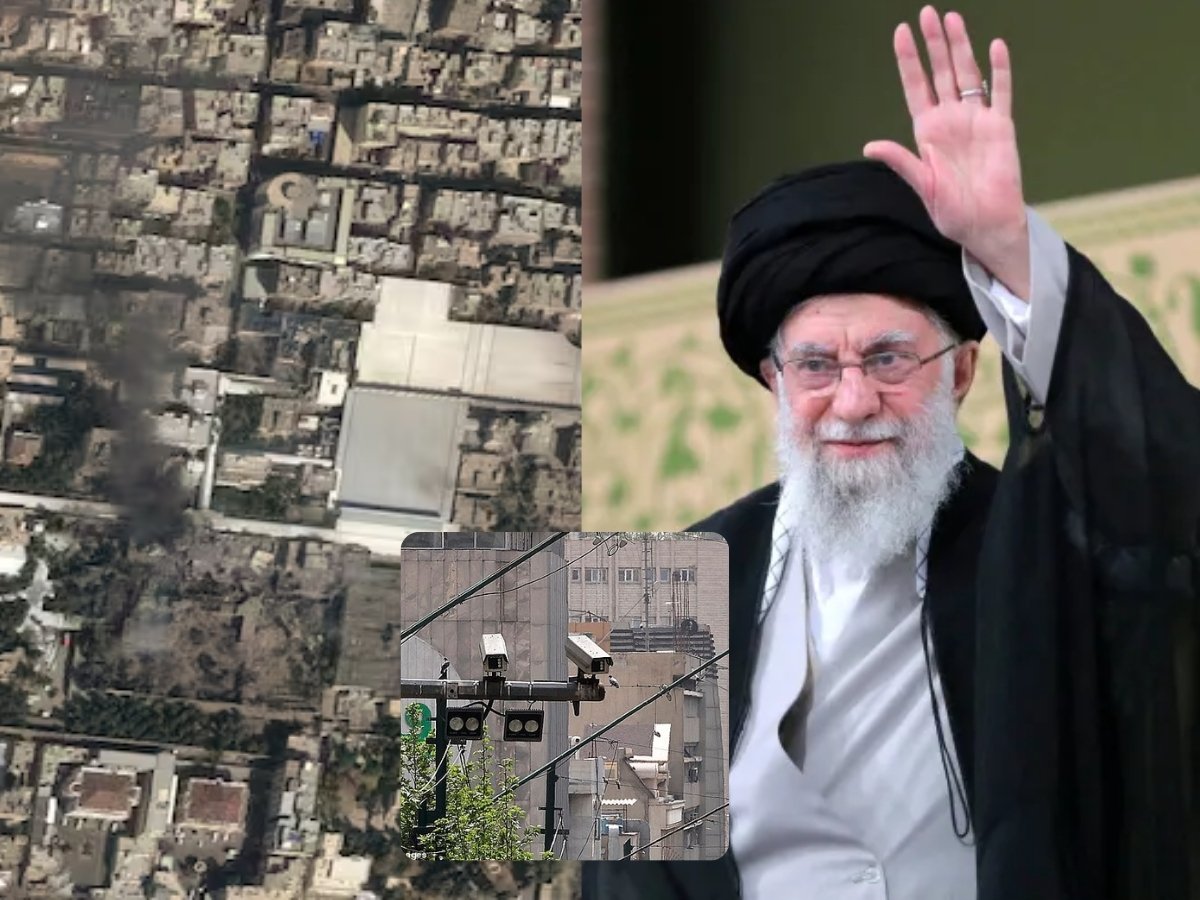
One of the most remarkable aspects of the intelligence campaign was the infiltration of Tehran’s public surveillance network. Israeli operatives reportedly hacked into nearly all of Tehran’s traffic cameras, gaining access to encrypted footage that was streamed back to servers in Israel. These cameras, which are ordinarily used by city authorities to monitor vehicle flow and safety in the streets, became remote surveillance posts. They enabled analysts to observe movement patterns near key government compounds and track the daily habits of security personnel who protected Iran’s elite.
3. Building a Pattern of Life Through AI and Algorithms
Simply accessing surveillance cameras was not enough; intelligence agencies needed to translate terabytes of visuals into usable insight. By applying advanced algorithms and analytical tools — including elements of artificial intelligence — the images were processed into detailed dossiers. These dossiers included information such as where specific individuals parked, their routes to work, duty hours, and habitual behaviors. From this data, intelligence analysts could map out the routines of key bodyguards and officials, effectively creating a comprehensive “pattern of life” that revealed when and how Khamenei’s inner circle moved at particular times.
4. Complementary Espionage: Human and Signal Intelligence
Digital surveillance was only one layer of the intelligence mosaic. Alongside it, human intelligence (HUMINT) and signals intelligence (SIGINT) played crucial roles. Intelligence services like Mossad have historically cultivated networks of human assets, informants, and covert sources within Iran and beyond. In parallel, signals interception and cyber penetration into communication networks — including mobile phone network disruption near key locations — further isolated the target and ensured that Khamenei’s protective detail could be monitored without warning signals or cellphone alerts. These layers worked together to cross‑verify information and pinpoint with unusually high confidence when the Supreme Leader would be stationary and vulnerable.
5. Coordinated Action: The Role of the CIA and Strategic Patience
While Israeli intelligence supplied detailed surveillance and profiling, the United States’ Central Intelligence Agency (CIA) also played a pivotal role. For months, the CIA reportedly tracked Khamenei’s movements, waiting for a rare convergence of factors — such as the timing of a meeting with top aides — that would justify moving from preparation to execution. Shared intelligence and operational alignment between the two countries meant that when the opportunity arose, there was a clear picture of who would be present, when, and where. This minimized guesswork and maximized the precision of the subsequent strike.
6. Precision Strike: Turning Intelligence Into Action
Armed with actionable intelligence, the joint U.S.–Israeli military executed a precision airstrike on the morning when Khamenei was confirmed to be at his office compound in Tehran. The operation was designed to exploit the window of time when the target and select senior officials were together, based on months of observation and real‑time surveillance feeds. The direct outcome was Khamenei’s death and the disruption of the Iranian leadership hierarchy. The strike underscored how intelligence gathering — from hacked cameras to encrypted communications — can transition from passive observation to decisive military action when conditions align.
7. Strategic Implications and Future Intelligence Warfare
The assassination of a sitting head of state — enabled by years of covert cyber and human intelligence operations — is a watershed moment in modern intelligence practice. It demonstrates how technological surveillance, combined with traditional espionage, can be integrated into long-term strategic planning. However, it also raises profound questions about sovereignty, escalation of conflict, and future norms in intelligence warfare. Allies and adversaries alike will study this operation for its technical and strategic lessons, potentially reshaping how intelligence agencies operate in contested global theatres.
Conclusion: The Invisible Threads of Modern Espionage
The elimination of Ayatollah Ali Khamenei illustrated a transformation in how nations collect, process, and act on intelligence. From city traffic cameras repurposed as spying tools to deep networks of informants, innovations in cyber and human intelligence made the operation possible. Far from an isolated military strike, it was the endpoint of a decade‑long effort that wove together cutting-edge technology with age-old espionage craft. That coordination of intelligence shaped not only a moment in history but potentially changed the landscape of modern intelligence operations forever.
Read More at : whitesystemz.com